Maintenance
Part of Does geography decide a rural business grant before merit does?
Nine rural business grant mistakes hiding in the fine print
Nine rural business grant mistakes, from misreading the geographic gate to starting work early, with what each costs and how to remove it before you apply.
Rural applications fail on a distinctive set of errors. Most of them come from the distance between the applicant and the office deciding, and from a definition of rural that is narrower and more literal than people expect.
Each of the nine below has a specific price, and each is avoidable in an afternoon.
What to take away
- Rural is a defined term with a checkable answer for your address. It is not a description of how the place feels.
- Much rural money arrives through somebody local rather than direct, so the first move is a call, not an application.
- Prior approval rules are stricter here than most applicants expect, and starting early can void an award.
- Distance is what the fraud in this category relies on. No legitimate funder charges a fee to apply.
1. Assuming you are rural
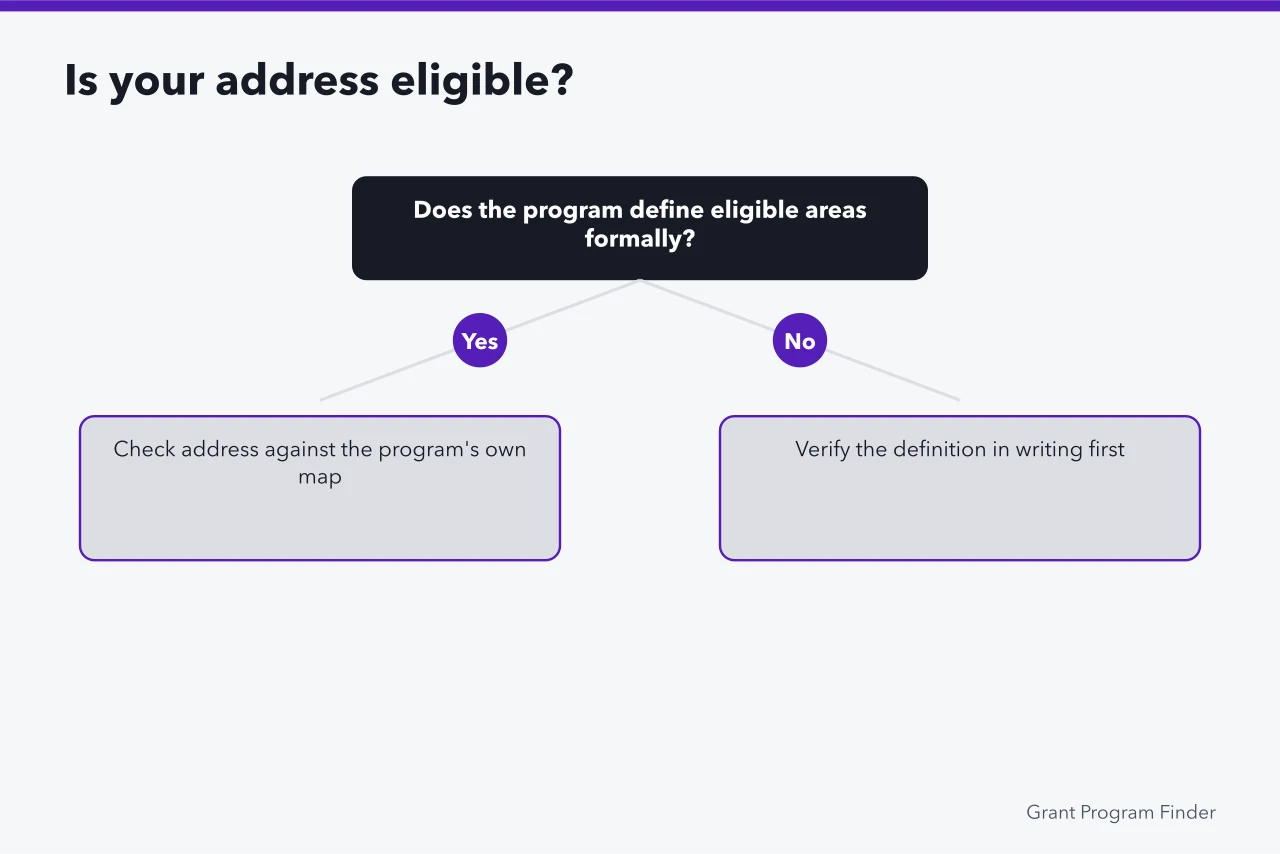
Programs define eligible areas formally, often by population thresholds attached to specific places, and the boundaries do not follow intuition. Somewhere that feels remote may sit inside an excluded area, and somewhere ordinary may qualify.
What it costs. An application discarded on the first screen, after every other part was done well.
The correction. Check the address against the program's own definition or map, in writing, before anything else. The reasoning behind the gate is set out in how the geographic test works.
2. Skipping the local intermediary
A large share of rural money reaches businesses through a local body: a district, a council, a cooperative, a development corporation, or a lender operating a program on the funder's behalf.
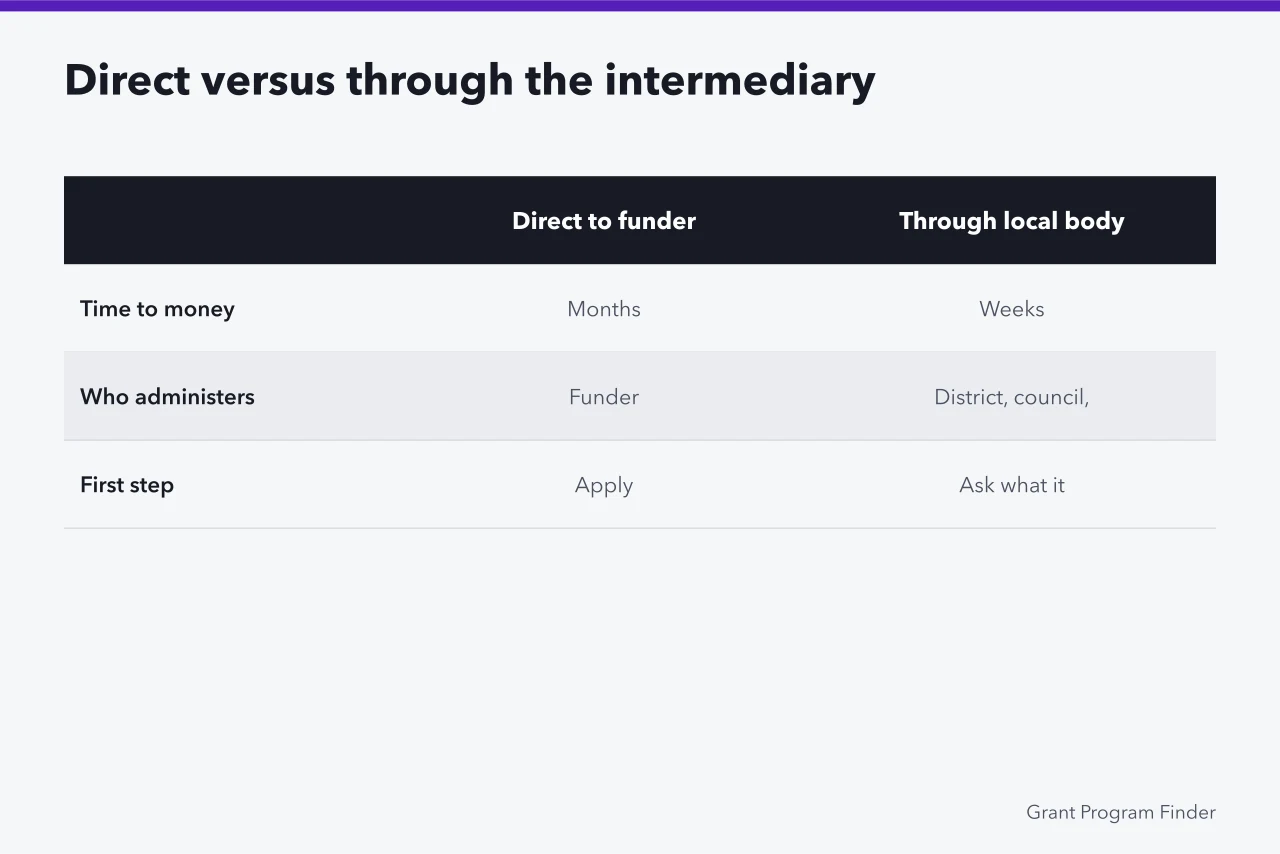
What it costs. Months of applying directly for something the intermediary could have delivered in weeks.
The correction. Find the local body first and ask what it administers. Which kinds of body those are is described in the offices that fund things near you.
3. Starting work before the agreement exists
Costs incurred before an award agreement is signed are frequently ineligible, and this rule is applied strictly.
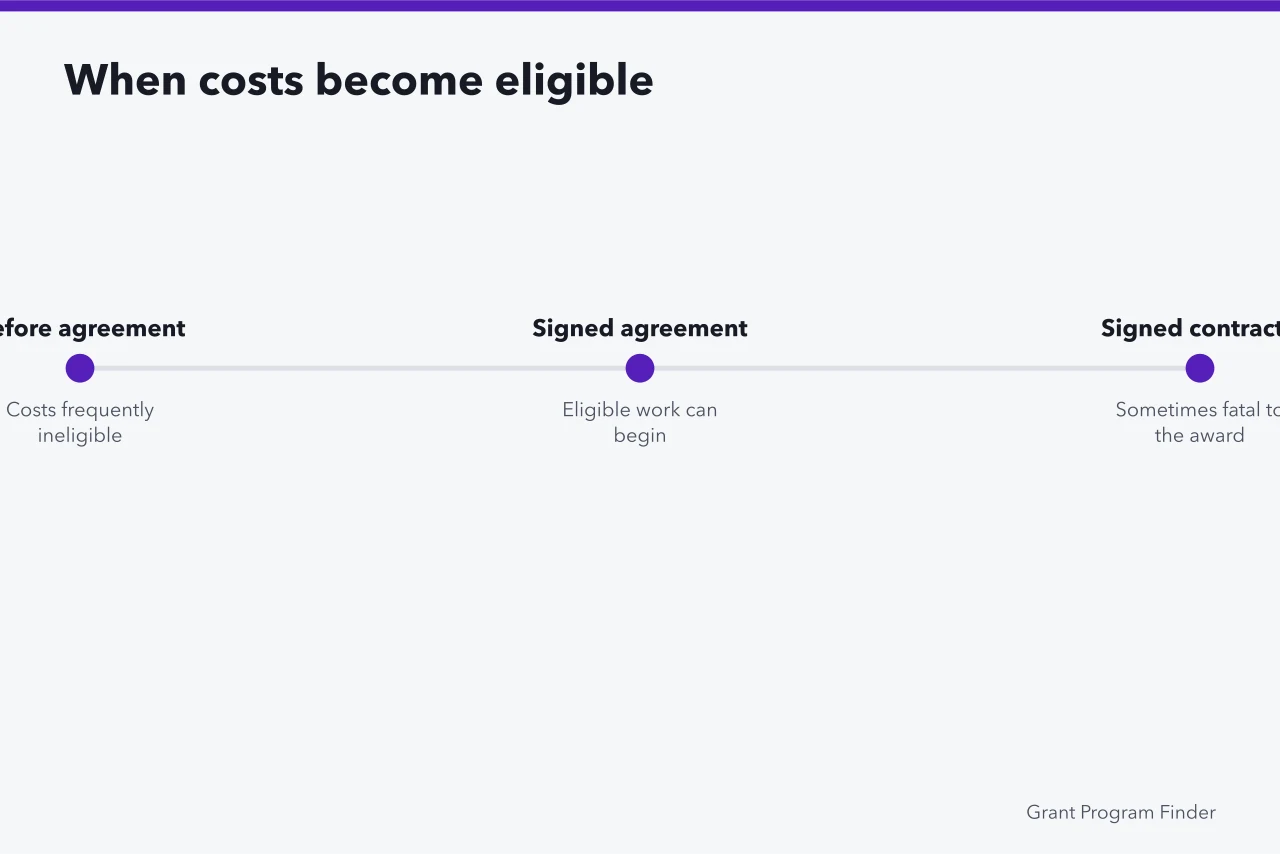
What it costs. The eligible portion of the project, and sometimes the award itself. A signed contractor can be fatal.
The correction. Confirm the start date rule in writing with the administering body, and hold every commitment until it is answered.
4. Underestimating the reimbursement gap
The money commonly arrives after you have spent your own, following a claim and a review. Distance and small scale make the lag harder to absorb.
What it costs. An award you cannot use, which is worse than a rejection because the work is already committed.
The correction. Size the gap at its deepest point and check it against your reserves, using the cash timing arithmetic worth doing first.
5. Reading a listing instead of calling the office
Rural programs change, close, and run out quietly, and third party listings do not notice. The office that administers the money does.
What it costs. Work prepared to terms that no longer apply.
The correction. Confirm terms with the administering body, and treat every secondhand description as a lead. Where the program is state-run, the offices worth calling are described in the state layer and how to search it.
6. Missing the conditions attached to the work
Public money brings public conditions: wage rules on funded work, competitive procurement, environmental or historic review, insurance, and performance commitments with clawback.
What it costs. A project that costs more than planned, or an obligation you cannot meet in a bad year.
The correction. Ask which conditions apply before you budget. The full inventory of what they cost is set out in what an award actually obliges you to do.
7. Confusing a guarantee with funding
Rural programs include guarantees that support somebody else's lending decision. A guarantee is not money to you, and the loan still has to be approved and repaid.
What it costs. Planning around capital that was never going to arrive as capital.
The correction. Ask what arrives, when, to whom, and whether any of it is repaid, working from the government's glossary of grant terms.
8. Applying when the eligible applicant is somebody else
Place-based rural money is frequently awarded to a public body, a tribe, a district, or a nonprofit organization, with businesses benefiting rather than applying.
What it costs. A rejected application, and a missed chance to be named as a partner in a successful one.
The correction. Read applicant type first, from the funder's own framing of who may apply and for what. Where tribal government is the eligible applicant, the routes are set out at the federal guidance on tribes and Native American resources.
9. Trusting an approach because it found you
Distance is exactly what the fraud in this category relies on. An unsolicited approach about rural funding, arriving by phone, text, or message, is an approach and not an opportunity.
What it costs. In the worst version, a payment for processing, release, or insurance that does not exist. Money sent that way is usually gone.
The correction. Verify only through the agency's published contact details, never through the ones the message supplied. The tactics are described in the FTC's account of government grant scams.
The mistake behind the nine
Treating this as a search problem when it is a relationship problem. The people who administer rural money are reachable, they know what is running, and they will tell you in a conversation what a season of reading would not.
Start there. Then apply only where the geographic gate, the applicant type, and the cash timing all come back clean, and accept that most of the time one of them will not.
Common questions
My address is borderline. Who decides?
The administering body, against the program's own definition. Ask them in writing and keep the answer, because a verbal yes is not something you can rely on later.
Is rural money easier to get than urban money?
No. The pool of applicants is sometimes smaller, which is not the same thing, and nothing in this category is easy to obtain.
Can I apply for several rural programs at once?
Usually, but check whether one program's money can count as another's match, because sometimes it expressly cannot.
Nothing seems to fit my business.
That is the ordinary outcome. Most businesses are not eligible for most programs, and the effort usually pays better in local relationships and public purchasing than in continued searching.